In the remodeling industry, there is a standard reflex: when something goes wrong, everyone starts pointing fingers. The general contractor blames the cabinet maker; the cabinet maker blames the delivery driver; and the driver blames the factory.
This "Blame Game" is more than just a headache—it’s a massive red flag. For a homeowner who values their time and their peace of mind, this is the ultimate nightmare: a project that’s stuck in limbo because no one will stand up and say, "I’ll fix it." When a contractor deflects, they aren’t just shifting blame; they are shifting the financial and emotional burden onto you.
Why Ownership is important to us
The "Blame-Game" Litmus Test: 3 Signs of a "Pointer"
You don’t have to wait for a disaster to see if a contractor is a "Pointer." Look for these subtle signs during your first few meetings:
- The "Handshake" Specialist: If they shy away from a detailed, line-item contract in favor of "don’t worry, we’ll take care of it," they are avoiding written accountability. Ambiguity is the Pointer's best friend.
- The Past-Project Grumble: Pay attention to how they talk about previous "bad" clients or "lazy" subs. If every story ends with someone else being at fault, it’s only a matter of time before they tell a story where you are the problem.
- The "Invisible" Project Manager: If the person selling you the job isn't clear about who is actually on-site to catch mistakes, it means they are planning to manage by phone. You can't take ownership of what you don't see.
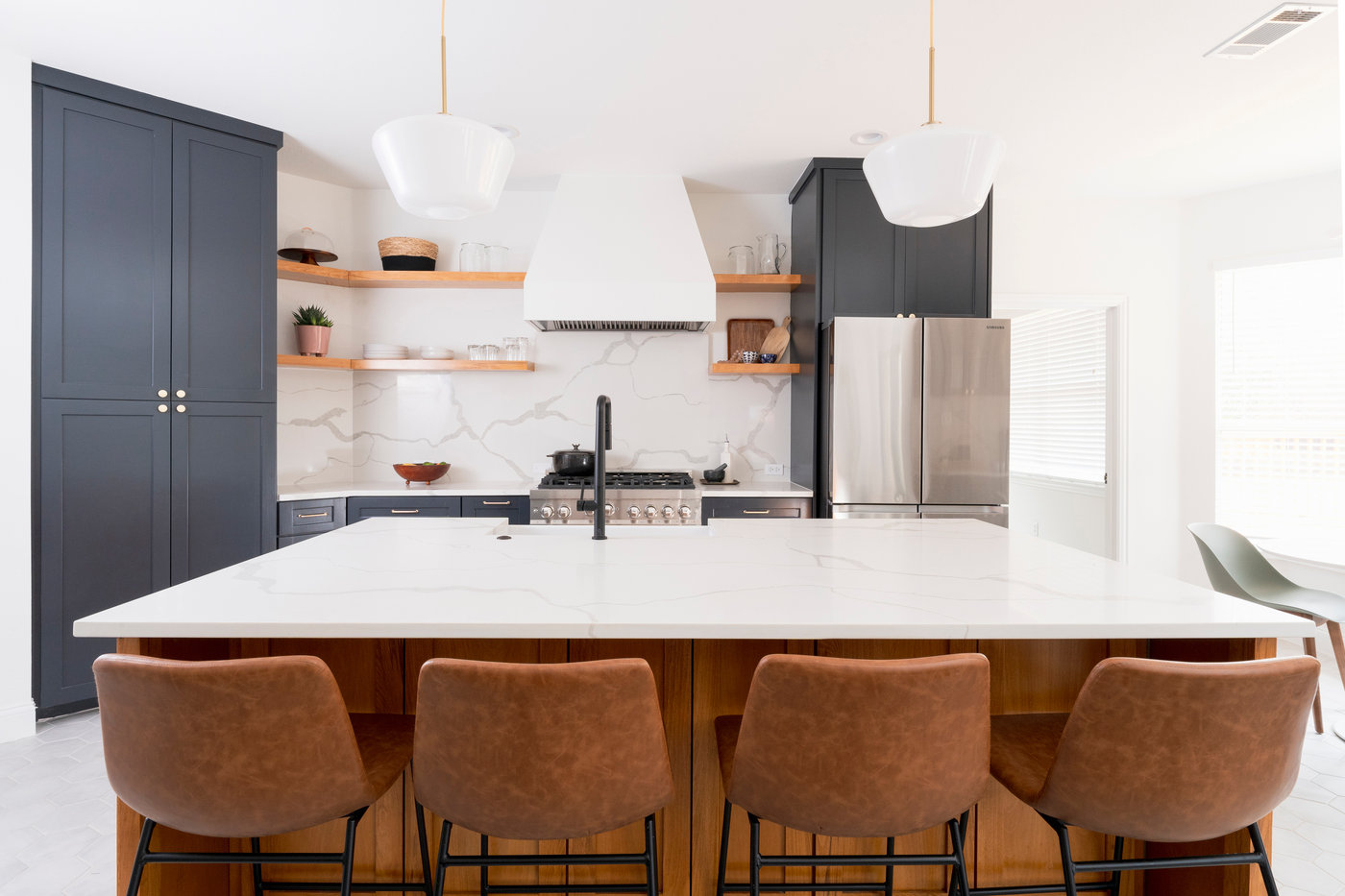
This modern-transitional kitchen remodel in Dallas, Texas features custom navy cabinetry, floating white oak shelves, a mitered quartz island and matching quartz backsplash were all delivered through our signature guided process and backed by our Ownership Promise.
3 Questions to Flush Out the "Pointers"
During the vetting process, don't just ask if they do good work. Ask how they handle it when things go south. A true partner will have clear, immediate answers for these:
- "If a custom vanity arrives damaged from the supplier, who manages the return and the 4-week delay in my schedule?" (A true partner owns the logistics so you don't have to).
- "What happens if your painter accidentally scuffs my new hardwood floors?" (Listen for: "That’s why they have insurance" vs. "We restore it to the original condition at our expense—immediately.")
- "Can you tell me about a specific time a mistake was made on a project, and what you did to make it right?" (If they say they don't make mistakes, that's your biggest red flag of all).
At Zion, we operate on a principle we call Absolute Ownership. We don't view our trade partners as "independent contractors" we can blame; we view them as an extension of our team. If a tile is set crooked, we don't argue with the installer while you wait; we manage the solution, hire the right artisan to fix it, and we absorb the cost. We would rather lose money on a project than lose your confidence in our character.

A luxury modern-spa bathroom remodel in Dallas, Texas features custom large-format porcelain tile and champagne gold fixtures to showcase the high-end craftsmanship and absolute accountability that defines our guided process.
When you hire a partner who absorbs the risk, you get more than a beautiful home—you get your life back. You aren't the project manager or the mediator; you’re the host, and we’re the ones making sure the stage is set perfectly for your next gathering.
Read more about our Ownership PromiseClick to learn how we got started